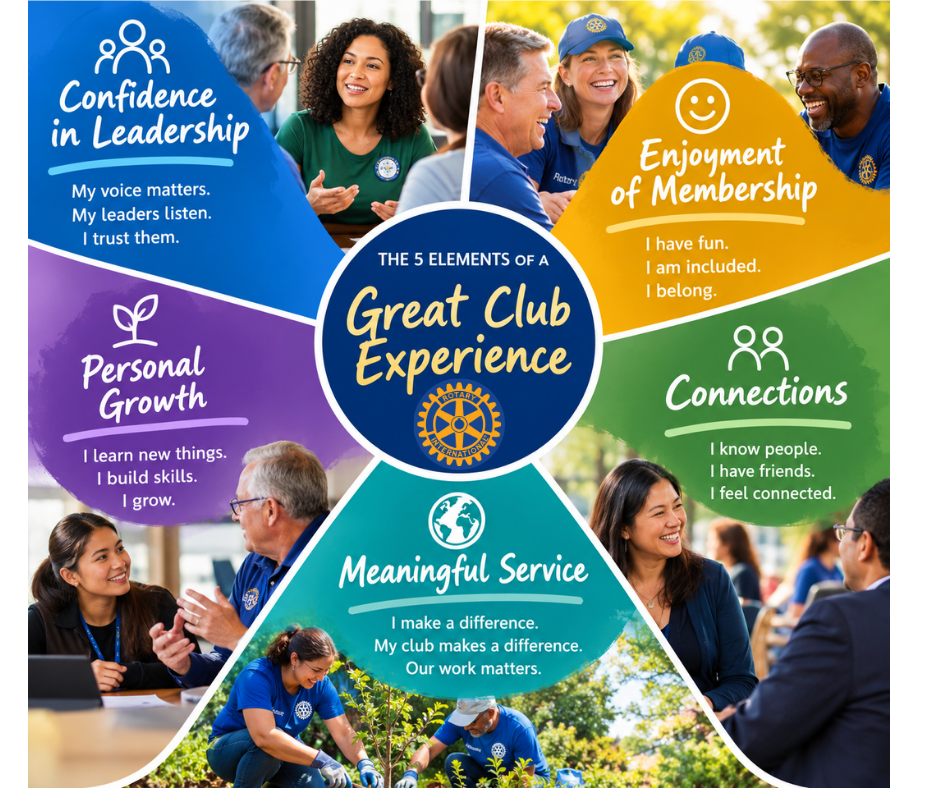
Creates a real sense of belonging in our clubs
A great club experience is for everyone
What makes a club a great place to belong?
Members want to feel heard, have fun, make friends, help others, and keep growing. The five elements help us understand these needs.
They also help us see when something may be missing. Maybe a member feels left out. Maybe meetings aren’t fun. Maybe people don’t see how their work helps others.
Not every problem fits just one element. Sometimes, more than one is involved. So, we don’t jump to conclusions or try to label the problem.
We notice. We listen. We learn.
Then we choose one thing to improve, try it, and see if it helps. We don’t have to fix everything at once. We just need to take the next right step.
A great club isn’t built by checking off five boxes. It grows through the little things we do every day: how we lead, welcome people, build friendships, serve others, and help each other grow.
The five elements help us see what matters. Listening helps us understand. Taking action helps us make things better.

Confidence in Leadership
Members want to feel heard and trust their leaders.
Help clubs build trust, listen to members, invite participation, and create leadership practices that make people feel valued.
When does this area need focus?
You might hear: “Decisions seem to be made before we discuss them.” “I’m not sure where the club is headed.”
You might notice: The same few people make decisions, members hesitate to speak up, or changes catch people by surprise.

Enjoyment of Membership
Members want to enjoy being part of the club.
Help clubs create enjoyable, inclusive experiences for guests, prospects, and members, beyond the regular meeting.
When does this area need focus?
You might hear: “It feels like another meeting.” “I enjoy Rotary, but I’m not having much fun.”
You might notice: Meetings feel like chores, energy is low, or members participate out of obligation rather than enthusiasm.

Meaningful Service
Members want to know their contribution matters.
Help clubs turn introductions into relationships, welcome new members intentionally, and connect people to others who share their interests.
When does this area need focus?
You might hear: “What difference are we really making?” “I’d like to do more than attend meetings.”
You might notice: Service feels routine, members can’t explain the impact, or people don’t see how their time contributes to a shared purpose.

Connection
Members want to feel known, included, and connected.
Help clubs connect members' interests and talents to worthwhile service, and communicate the difference their work makes.
When does this area need focus?
You might hear: “I still feel like an outsider.” “I only know the people I sit with.”
You might notice: New members are left on their own, people cluster with familiar friends, or some members rarely get beyond small talk.

Personal Growth
Members want opportunities to learn, contribute, and develop.
Help clubs give members opportunities to learn, contribute their expertise, develop leadership skills, and discover new interests.
When does this area need focus?
You might hear: “I’m not sure how I can get more involved.” “I’d like to learn something new.”
You might notice: Members feel stuck in the same roles, newer members don’t see ways to contribute, or people’s interests and strengths go unused.

Not sure where to start?
Notice a signal. Describe what you observed without assuming why it happened.
Listen to members. Ask questions and gather perspectives from the people affected, including those whose voices are less often heard.
Explore the five elements. Ask which elements might help explain the experience. Allow more than one answer, and don't force a fit.
Identify the underlying issue. Separate what members are experiencing from the cause of that experience.
Choose one improvement. Agree on an action, who will take responsibility, and when the club will review it.
Check the impact. Ask members whether the change helped. Continue, adapt, or try something different based on what you learn.